A LUMINOUS WOUND
a film by Craig Devine
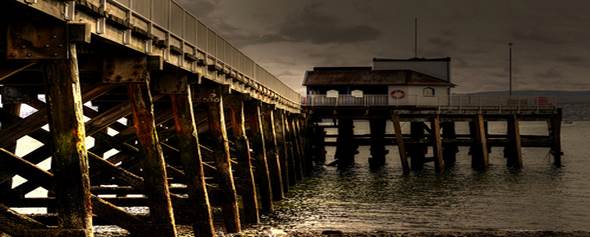
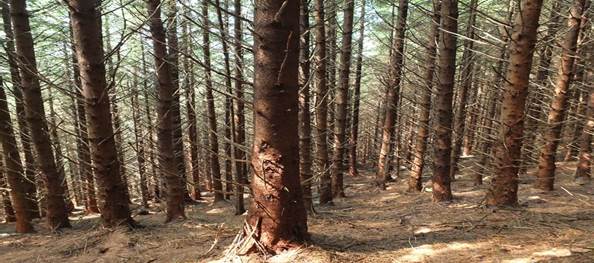
PREMISE: A terminally ill retired detective is tipped off about the potential whereabouts of a suspected killer who vanished in unsolved case some thirty odd years before. It’s a case that still haunts him to this day: he drops everything to track the man down- what he finds challenges all he believes in. Is it him? They do not recognise each other after such a long passage of time- is someone the same person if experience has transformed them from what they were before- should that person then be punished for something they did when they were a different person? Is it indeed possible for someone to change so radically?
BRIEF SYNOPSIS: Dempster Lawson a retired detective drives to the wilderness somewhere in the Scottish Highlands- there a man lives in isolation, cut off from civilization- who lives a hermetic lifestyle. He’s been tipped off that this strange man is Kitto Malise, who committed diabolical murder some thirty years before, in the Glasgow crime world. Dempster watches him from a far but is unsure if it’s the same man or not- the intervening years and the physical changes that have taken place fuel his doubt- but eventually he confronts the man who is living in an isolated cottage. The man ultimately confesses that he is Kitto Malise and offers to comply with Dempster’s wishes to go back to Glasgow and for justice to be fulfilled. But this solitary spiritual man has a power over Dempster and seems to possess healing abilities that somehow convince him that he really is a different man.
GENRE: A personal mystery drama that revolves around spiritual themes of identity, selfhood, spiritual experience, redemption, the nature of human experience itself- should someone be punished for something they did when they were a different person?
LENGTH: 9-10 minutes
VISUAL STYLE/MOOD: In keeping with much of the preliminary research I want to imbue A Luminous Wound with a presence of spirituality, a mysterious tension, that we see exhibited in the films of Nuri Bilge Ceylan, and historically in Tarkovsky, Kieslowski, Bergman and others in the ‘Canon’ of metaphysically concerned filmmakers. The main visual inspiration for the aesthetic style of the film will originate from those traditions- by exploring those key themes that define the spiritual in the art film: the investigation of self-identity, of death, metaphysical framings of ethical dilemmas, intimations of a world beyond the material, and the transformative nature of spiritual experience itself. The horizontal and vertical narrative axis articulated by Maya Deren and Pasolini and revisited by John Orr in his study of the Cinema of Poetry is a structural guide to the film: for example Close-Up (dir. Kiarostami’s, 1990) is a film that is largely monotonous, quotidian in its representation of the mundane but then vertically ascends to lyricism with the motorbike scene where we see wheat fields and poetry being recited- Bresson utilizes the same suppressed technique to elucidate the power of transcendent experience in his film, particularly Mouchette and Au Hassard Belzhaussar. The Dardenne Brothers utilize this technique in contemporary cinema. Sergei Paradjanov, Kieslowski, Tarkovsky or Terence Malick are more baroque in their aesthetic by constructing complex set-pieces and elaborate allegorical structures to represent human experience. Nuri Bilge Ceylan is in between these styles: this is where A Luminous Wound will largely be, tempered by a contemporary minimalist style that characterises much of world cinema, such as Apichatpong Weerasethakul or Pedro Costa.
A LUMINOUS WOUND- EXTENDED TREATMENT
We see something sink down into green-blue water, it’s difficult to make out, it could be a strange sea creature, dead possibly; or it could be a hammer or some man-made instrument- we can’t quite be sure.
We see down a long empty long hallway. A phone rings. A man comes into shot, he gazes into a mirror above the phone. The phone still rings. The front doors letterbox opens and makes a loud chapping noise- something falls to the floor- it looks like a letter or a note. The phone still rings. Dempster Lawson, a retired detective, goes over to inspect it, he picks it up. Before he opens it, he looks through the peephole to see if anyone is there. The landing is empty. He opens the door and looks down the staircase but there’s no one there. We hear a door close loudly.
Back at the flat Dempster looks out of the window, a man walks out of shot around the corner of a tenement row. Still at the window Dempster opens the letter and reads it. There’s three photographs. An old one of a young man, its marked with age, creased. The other is of an isolated house in the middle of nowhere. The last one is fuzzy, pixilated even, a digital copy. An outline of something, nebulous, ill-formed. A person, maybe. A face. Its blurred. A man’s face. Is it him? The killer? Fugitive. At large for over thirty years. He zooms in on the image.
A train sits at a station. It languidly moves away to reveal Demspter standing at a deserted platform of a Victorian train station. He places his mobile to his ear and begins to speak. He tells his wife he has found his man and that he will be safe.
Dempster is sitting, his bag at his feet, on a small boat. He studies a scrap-book. There are pictures of himself younger, in police uniform. He is receiving awards. There are newspaper clippings: cases, incidents, events, that define a career, a life of service. He lingers on one headline. Murder. Gangland. Decapitation. The killer gone free. Dempster’s face is damned with regret. He coughs suddenly. He spits into a handkerchief. Spots of red on white. Every so often he scrutinizes the landscape, as though intent on memorising its obscure contours. In every direction a dense forest of black mountains crowds the horizon- eventually the shoreline comes into view. Dempster steps off the boat and walks down a path leading to a forest.
A series of still lochs spread out in the distance, like a glossy blanket, shimmering. Dempster zips up his jacket. He climbs down a precipitous verge that opens up to reveal an isolated cottage. It hugs the shoreline. Dempster lies down and takes out the photograph of the house. Snap. Bang. This is it. He takes out a zoom monocular telescope. He watches a man cleaning a bicycle in his garden. Dempster watches a man tending to his garden. Dempster compares the man to the fuzzy image in his photograph. He looks unconvinced.
We see coffee being poured from a flask into a tin cup. Dempster sips from it-he chews on a sandwich- he sips again at the cup. He suddenly sparks to attention: through the lens the man leaves the cottage and walks out of sight through the dense foliage of the forest. Dempster gets up and climbs down the verge to follow him. The small white
The cottage faces the obsidian stillness of the deep loch, the waters lap at the fringes of the garden. A gloom begins to gather, clinging to the clotted grey clouds- Dempster’s feet are caught in the wet-webbing of the boggy soil. The sod is fat with rain, a heavy sponge. All the landscape heaves with the heaviness of water. The strain of the struggle, the effort to navigate the floodied gullies slashes at his lungs- – he coughs, rasps, sputters, like a fish out of water. Suddenly Dempster leans against a tree, it holds him up. water. He gets out his white handkerchief. Spots of blood appear, red dotting the white. He wipes the excess red from his mouth. He approaches the cottage, but he sags- like a gutted scarecrow- lungs swamped with some toxic tumour gathered in his burning chest.
Dempster chaps the door. No, one answers. He notices a bicycle rests on the wall, he checks the tyres, they’re dry and very clean. He then goes inside. An open fire burns. It’s a simple dwelling. Only a few possessions dot the interior: a tin cup on a window ledge, a crucifix and a human skull sit on the window ledge. On a long wooden table there is a spoon, plate, rolled up blue blanket, and a bowl filled with oranges, apples and a melon. It’s an ascetic lair. Steam comes from a pot that sits over the fire. Dempster looks out of the window, a figure flickers through the branches of the trees.
Dempster follows the man, where the path climbs steeply, rapidly. The man is wearing a long dark coat, he comes in and out of the brilliant patchwork of flickering greens of the forest. Suddenly it opens, and we can see a vast network of dark fjords as far as the eye can see. The big sky is endless here. sky seems endless here. The black humps of the mountains, like arched spines rising, leaning over the loch. Dempster calls to the man. But there is no answer. He raises his voice this time. It hurts Dempster to shout so loudly. He takes deep breaths. Dempster looks up and the man has vanished. He now stands behind Dempster. He obscurely mumbles some enigmatic phrase.
Dempster turns to face the man and the man approaches closer. The man is devoid of sophistry, he is a tall elegant man alive with rough sincerity, like the simple truth of an animal. At first Dempster cannot fully see the man’s face: he displays some agitation, impatience. As the man draws closer we can see his face clearer now. The closer the truth is less sure Dempster is now- maybe it’s not him? is the less sure he is now- maybe it’s not him? As Dempster approaches him the man pulls up his hood over his head and turns his face to him. ‘Can I help you brother’ he says.
The man speaks in a cool clear tone. He ushers Dempster towards the direction of the cottage. They enter the cottage. Dempster sits next to the fire. The man takes the boiling water and pours two cups of a hot liquid, tea possibly. The hooded man is partially clothed in shadow, the light is dim in the house. He lights a series of candles spotted around the place. Demspter seems less sure of his thesis now. The face, even in this dull light, looks sick with sadness. The man stands and offers these candles to each part of the cottage in votive style, like a ritual. Dempster can only stare in amazement at the skull on the window ledge.
‘Do you know who I am?’ asks Dempster. Is there recognition? The signs of age between them make any recognition too difficult. There is silence. Interrogation in the pauses. Dempster asks him if he is Kitto Malise. The murder suspect who went missing over thirty years ago. The man is dumb. He plays with some shells lying on the wooden block masquerading as a table. Dempster’s wooden chair creaks loudly, expressing his impatience. The man expresses his disgust at what Dempster represents, and even the world he too came from long ago. ‘Your world is a plague’, he says. There’s a further pause. Everything shivers with the breath of the cold loch, everything badged and bruised with wilderness. ‘It is filled with the lovers of dead things’, the enigmatic man adds in a low even voice.
In the garden Dempster puts a tent up. He can see the cottage from his vantage point. He can watch the man come and go. In the tent his breathing is not so great, he breathes deeply. He coughs. Smaller beads of blood appear on the white of the handkerchief. He takes out his mobile and phones his wife. There’s no reception. He looks up and the man is standing over him with a bowl of food. He hands Dempster the bowl and he takes it. Dempster learns that he is off grid here. All signals are dead. ‘You do understand we must go back tomorrow Kitto?’ The man nods and walks back into the cottage.
We see Dempster’s face, he looks down to see his hand is white, with a red pill in it. He swallows the red pill. The camera pans out to reveal him sitting in a crucifixion pose on a chair in a river- a watery cataract pours all around him- his palms are bloodied, stigmata like. Red leaves float all around Dempster as he sits in the river. A red-bulb swings in a white room. And a bird sits on a red bridge. Suddenly it takes flight.
Dempster suddenly wakes up in the tent. His face is soaked with sweat. There’s a light burning in the window of the cottage. It illuminates the crucifix and the skull on the window ledge. The window’s look like frozen fire, like large blocks of amber, glowing like tigers eyes. The fire burns furiously. But it looks as though no one is inside. Dempster chaps the door. No one answers. He goes inside. He picks up the skull and holds it against the light of the fire. He places it back on the window ledge- where is he? Evading Justice again?
Back outside Dempster sees the man, through a smoky haze, standing at the fringes of the forest. standing at the fringes of the forest. He is dressed in his long black coat, a mysterious glow radiates form him, and he stands at gazing out to the water of the Loch. Dempster shouts toward the man, he hears immediately. The shouting doesn’t hurt Dempster this time. The shouting doesn’t hurt Dempster this time. He looks surprised at himself, and he rubs at his chest as though looking for something familiar, something lost. It’s almost dark now. The man turns to face Dempster and we see him holding a lamp. He makes his way towards Dempster. He opens his coat and reveals something wrapped around his neck. The night is rapidly cloaking everything in long shadows. He takes it from his neck and hands it to Dempster: it’s something wrapped in a thick reddened cloth. Dempster doesn’t take it, he looks horrified, and he makes a gesture toward the man.
‘What is it?’ asks Dempster. And he gestures again for the man to open it. ‘Its a souvenir of a former life’, the man replies.
The man holds the cloth heavy like a relic, a talisman of pain. He open’s the cloth, it’s almost rigid, hard, clotted with age. with age. It’s a rusted claw-hammer wrapped in an old bloodied shirt. A device of death emblamed in blood.
‘Kitto Malise savagely beat another man to death with that hammer all those years ago’ says Dempster as he looks anxiously at the hammer. ‘I once knew a man called Kitto Malise- with all the futile vigour that entailed’, the man replies. man named Kitto Malise- with all the futile vigour that entailed. Demspter asks why he beheaded his victim. ‘Do with me what you will- Kitto Malise is no more’, replies Kitto.
He hands Dempster the hammer. He takes it this time. Kitto appears intensely emotional. He lifts the lamp and we see his face clearly now. it is luminous. He points toward the cottage. With the aid from Kitto’s lamp they make their way back to the cottage. Inside the cottage Dempster takes the skill and holds it in his hand, inspecting it as if it were an ammonite curled with the hard shell of its secrets. Dempster places the rusted hammer on the wooden table. It rests next to the cracked fruit bowl. He tries to phone his wife. He gives up and puts his phone away. The signal is dead. Kitto blows at his lamp and it goes out. All is darkness in the cottage. Suddenly again Kitto embraces Dempster. They struggle for a moment, Dempster relents, and Kitto clasps at his lower chest with his warm hand, and some force buzzes and burns inside Dempster.
‘Where does the light go?’ Kitto says enigmatically.
Suddenly there is a flickering of light, it illuminates Kitto’s face. It appears paradoxically satanic and pure at the same time. We see the skull dimly lit in the faint lamplight. We also see the claw-hammer. Dempster had grabbed it in the darkness. He drops it to the floor. Kitto steps back, releasing his grip. Kitto’s face is radiant, beatific with calmness, monstrous with a strange bliss. ‘I ripped a rose from its roots…and an abyss opened up’, he whispers. With these words Dempster collapse
All goes black.
Dempster wakes up on a bench in the cottage garden- the light from the sun blinds him, momentarily. Kitto stands over him, looking down, and the sun flares behind his head. Dempster looks own at the hammer at the hammer and skull next to him on the bench and picks them up. They walk down the track that led him to the cottage, that leads ultimately to the closest village. village. Dempster moves with purpose, he moves without the slightest hesitation or signs of ill-health. He drops the hammer to the grass. Kitto gazes back at him. The loch is calm, still as Kitto’s mind. Dempster picks the hammer up and wraps it in the rigid red cloth and throws it into the loch.
‘Go back’, says Dempster.
‘Thank you, brother’, says Kitto- he then goes over and brings his bicycle to Dempster.
Dempster gets on the bicycle and rides it all the way across the path- the early dawn is glorious across the glowing sky- his face is rapturous, it beams with life. His handkerchief falls from his pocket and nestles in the grass. He smiles as he cycles furiously, and the image seems to become brighter.
We see the rusted claw-hammer sink slowly down into the green-blue abyss of the loch.
END.

RESEARCH PROGRESS
Anthony Gielty has agreed to an interview in Paisley in a few weeks, and with this I hope to gain some much-needed insight into the rehabilitative power of spiritual experiences as transformative, particularly in respect to criminals finding spiritual purpose. I had originally contacted various groups in Stornoway, particularly drama groups, and also the couple who built the Mangersta Bothy- the originally intended location- but now I had to go back to the drawing board as such, after deciding to use the Ardgartan Peninsila instead. I had even contacted a couple of filmmakers, a girl who lives in Uig area, but studies at Napier, Zoe Paterson MacInnes, who now says she will help me with the film. With Ardgarten only 50 minutes from Glasgow (40 miles) via the M8 and the A82, it means I can now do a recci and scout locations for the film. This was something that I couldn’t really do to any great extent with A Final Wish, because of access issues with Arran. A much closer, but still remote and to some extent ‘wild’ landscape, will hopefully mean I will avoid the same mistakes as I did with A Final Wish.
In terms of locations I need a flat for start of the film- I was going to use a couple of friends who live in tenements- I have a friend who has a long narrow corridor that is very photogenic. As for the cottage I was going to minimise the internal scenes and want to use the Mark Cottage Bothy. The Mark Cottage (also known as Mark Ferry) is situated on the Ardgartan peninsula on the shores of Loch Long. Normal access is by forest track from the A83 Arrochar to Inverary Road at Forest Enterprise Information Centre to a car park at Coilessan. Either walking or cycle access only is permitted from this point to the bothy. Approx. 7.5km and about an hours moderate walk.
Coilessan. Either walking or cycle access only is permitted from this point to the bothy. Approx. 7.5km and about an hours moderate walk.
Mark Cottage Bothy can be viewed here on the Mountain Bothies website: https://www.mountainbothies.org.uk/bothies/southwest-highlands-islands/mark-cottage/
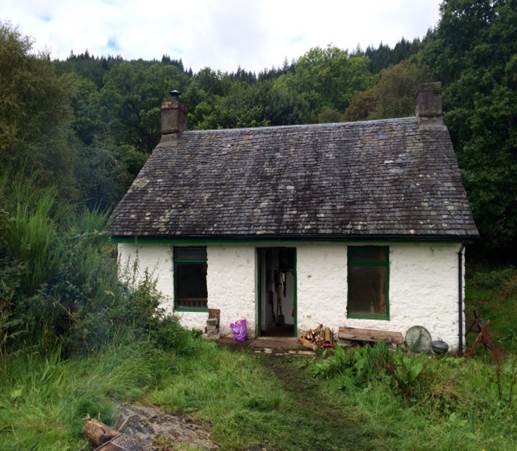
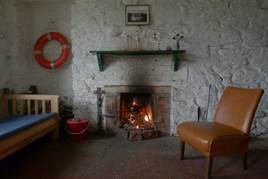
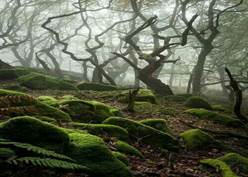
And again here is a short video of the cottage and surrounding landscape: https://www.youtube.com/watch?v=0WR2MBWnRCE
The bothy is normally fairly quiet due to its location, frequented mostly by kayakers, but I want to minimise internal scenes to limit the risk of disruption to the shoot. External filming will not be an issue at all, as there are extensive grounds in the garden and forested areas surrounding the bothy. The positives of the location is that is isolated and yet easily accessible and also very quiet so in theory there will be little disruption to shooting or problems with extraneous sounds. The cottage itself has an open fire, which I was keen to have in the film, as a prop, it’s a free location, and has a superb location natural setting that lends itself to cinematic representation right on the shores of loch long/surrounded by real forest. Mark Cottage also has a distressed patina that is difficult to manufacture and even has antique photographs of the original owner of the cottage.
An extra element to the film is the possible hiring of a boat for the scene where Dempster sails across the shores to the cottage, to illustrate its isolation.
Boats for hire for the day: http://www.lochgoilcruisers.co.uk/
With 3 hours at £70 per boat or £100 for up to 6 hours
The train platform scene will be done at either Tyndrum or Crainlarich or Bridge of Orchy
The following video shows the potential of the Argyll forest:
TALENT/ROLES:
In saving money on not now having to travel to Lewis or booking accommodation will be the possibility of hiring professional actors for the roles. I have minimised the cast to two characters, as I did for A Final Wish, as I think this makes things much more manageable. The two roles call for older males Dempster Lawson (late 50s to early 60s) and KItto Malise who is more or less the same age. I have identified possible actors for the roles:
Wish list would consist of the following: David Hayman Gary Lewis, John Stahl, Peter Mullan, Graham McTavish, Brian Cox, James Cosmo, Denis Lawson, Bill Paterson, Gregor Fisher, or Iain Glen. The reality of course is that I’m unlikely to get any of these brilliant experienced Scottish actors, but nevertheless I will spend the next few weeks attempting to gain some sort of access. A more realistic prospect at present is John Comerford of River City fame, High Times, and Red Road, who Nick suggested. I have already been in discussion with Alec Westwood of Still Game, Roughnecks for the role of Dempster Lawson. And I have contacted Robert Alexander McCafferty who has played major roles in Doctors, Casualty, Silent Witness and Waterloo Road, for the role of Kitto Malise. At present I’m not entirely convinced if these actors could pull off these different roles: Dempster character is vulnerable, tough, but unwell, terminally so. It would appear, who feels he’s on a mission for justice and yet is maybe searching for something else, some deeper meaning to his life. The other character Kitto is an ex-hardman, criminal tough guy of sorts, who is full of vitality, an elemental power, almost at one with nature, who draws great vitality from some unknown source- an older more vigorous man who is contrasted with the wastage of Dempster. These are demanding roles that call for great acting maturity.
CREW LIST:
In terms of crew I’ve already spoken to Claudia Docherty for producer and she has formally agreed to do it. I also have Aislinn Belot, who has also offered to help organize things. Eric Liddle also said he would help with production and has offered to edit the film as well. At present I favour Jenny Scott, and again she says she that if she’s able to take on the role, if for example her own film is rejected, she will edit the film. Both Claudia and Aislinn worked well on the Refuwegee film and with Claudia we worked effectively and without fuss on A Final Wish– a relatively stress-free environment and well-organized shoot. I asked Maitane Eyheramonho if she would do the sound but she hasn’t got back to me as yet- no doubt she has been inundated with offers- and has maybe already agreed to other films. In terms of DP I worked with Julian Schmidt on A Final Wish, but I didn’t quite feel that our rapport was as ideal as I would have liked, so I may use someone outside the course, with UWS graduate Samueil Foley, a trusted friend and someone I know I can rely on; I’ve also kept in contact with other people from the undergraduate class, including Traian Trilbure, who is a first class cinematographer. But I would be open to using others within the course, including David Sexton, Jordan Yorkston, or even Aislinn.
DIRECTORS BRIEF STATEMENT OF INTENT
For me Cinema is at its most powerful when it provocatively frames questions about human identity, the truth of experience and the nature of reality- cinema in my opinion does this more effectively than any other artistic medium. As a truly plastic art it can utilize dialogue, performance, visual images, photography, music, narrative drama, poetry, and more, to great effect- and the canon of spiritual films mentioned above all demonstrate that more vividly than any other cinematic form.
Nuri Bilge Ceylan in his early films from Small Town (1998), Kasaba (2000), Uzak (2002), Climates (2006) and Three Monkeys (2008) all featured very small crews of no more than 3 to 5 people. He starred in Climates with his wife, he featured his mother and father in his first films, and realised early on that ‘it’s expensive to have slow moving shots’ in films- he used fixed tripod shots and rigorously framed Neo-Bazinian long takes. What’s more these films often feature startling images inspired by found objects or features of native landscapes such as capsized boat in Uzak or the flickering light from a train bridge at the beginning of Three Monkeys or the slow-motion shots of snow falling in Climates. In some modst way I hope to emulate these principles of Ceylan’s in A Luminous Wound and exploit the power of big landscapes and the power of the natural world to enlarge reality, not in a surrealistic sense, but in service to a more metaphysically concerned style that loads the filmed world with spiritual meaning.
 craigdevine88-dkjtq
Leave a comment